
Pakistan
In September 2024, Pakistan entered its 24th loan agreement with the IMF, still struggling with the fallout not just of the pandemic and global inflation but also from the devastating 2022 floods that engulfed a third of the country and ruined its health and economy, centring the precarity of Pakistan’s climate vulnerability. In the middle of this climate emergency, rather than advocating for debt relief, the IMF withheld a $1.1 billion tranche of the previous 2019 loan programme until severe energy subsidy cuts and currency devaluation were implemented to achieve a 2.5% GDP fiscal consolidation. This undermined Pakistan’s ability to generate enough funds for flood recovery and climate action accelerating inflation and further deepening gender inequality. Bizarrely, earlier reforms under the 2019 programme the IMF had also attempted to eliminate critical tax exemptions on renewable energy products such as solar panels and wind turbines, directly contradicting the country’s green energy transition (and the IMF’s own recommendations for more renewables).
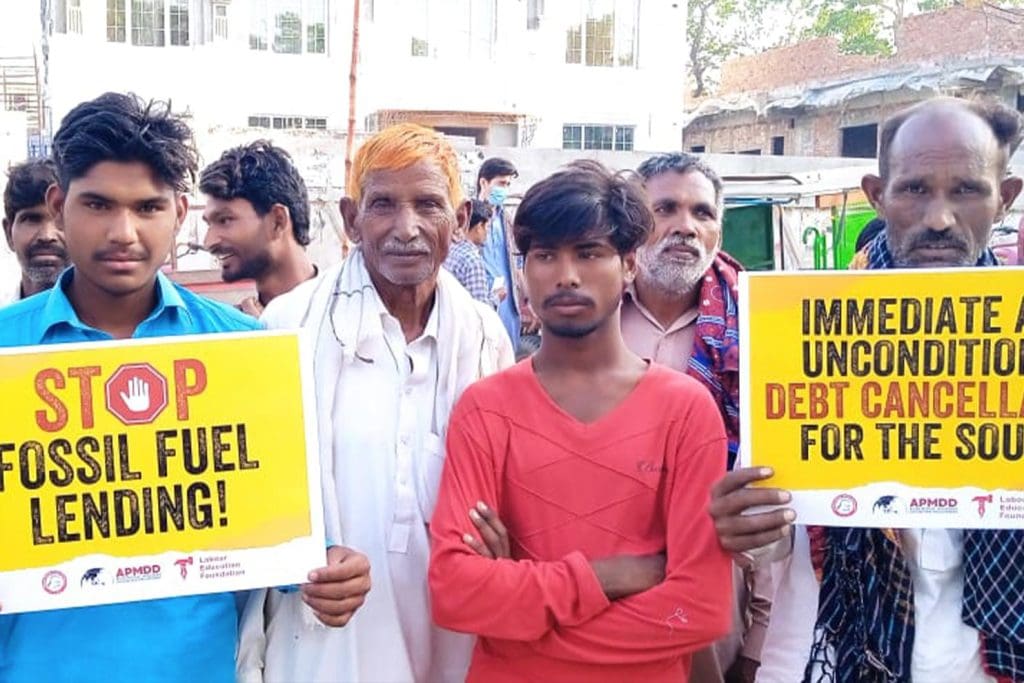
Credit: APMDD Pakistan
Pakistan was once again forced into austerity reforms in 2023 in the hopes of a new SBA loan with decades of poverty reduction progress wiped out in a single year and the nation brought to the brink of default in the process. Within weeks, four million people were pushed into poverty. Under the SBA, the same austerity measures were then reframed as essential for climate resilience by the Fund. Previously, the EFF programme had been suspended because Pakistan resisted IMF recommendations to increase electricity prices and impose additional taxes because of the foreseeable poverty impacts. Overall, decades of successive IMF programmes have translated into Pakistan’s increased vulnerability to climate risk and debt default, and the series of loans over 2019-2024 provide a stark example of how the Fund has exacerbated climate impacts in debt distressed countries in practice.
Despite integrating climate risks into its Debt Sustainability Analysis (DSA) for market-access countries from 2021 onwards including in Pakistan’s 2023 SBA programme, the IMF throughout this period failed to conduct a meaningful analysis of trade-offs between the negative impacts of austerity (e.g. on growth, poverty, and development spending), rising debt burdens, Pakistan’s climate vulnerability, and its ability to invest in necessary adaptation measures as well as in rebuilding after the flood. Instead, the programme continued the same formula of more austerity, external debt and reliance on the private sector, only this time under the cover of ‘climate action’. Adaptation costs were severely underestimated – at 0.6% of GDP compared with World Bank estimates of 4.6% for adaptation and 10.7% for climate resilience overall – and without discussing any practical implications, such as investment needs, plans, and timing. Climate risk estimations were riddled with methodological limitations, uncertainties in data sets, and inconsistencies in assumptions, resulting in their underreporting.
With a debt-to-GDP ratio of up to 90% over the period 2019-2023, over half the government’s revenue goes to debt interest payments – evidencing the Fund’s frequent over-optimism in assessing debt sustainability and underestimating debt restructuring needs, a dynamic further exacerbated in a context of climate vulnerability and related public investment needs. Despite considering Pakistan’s climate vulnerabilities “exceptionally high” and estimating a 50-75% probability of optimism bias (rising to over 75% beyond 5 years), the 2023 DSA continued attesting the country sustainable debt. The rising debt burden was accompanied with shrinking development and climate spending (slashed by half in the flood year), a contraction in real GDP, and record levels of inflation as well as soaring external debt service payments. Debt servicing outsized developmental spending 11 times in 2023.
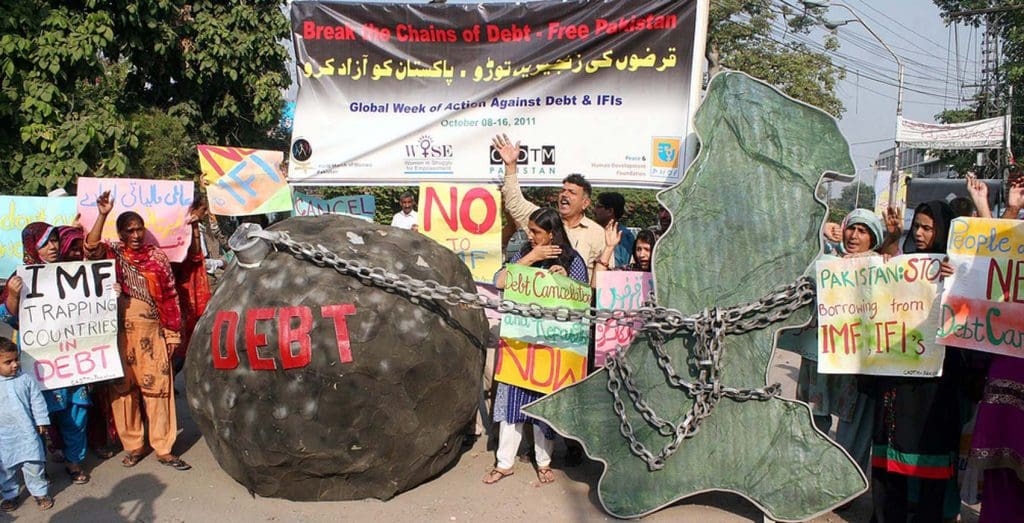
Credit: Asianet-Pakistan/Shutterstock
“Still reeling from the 2022 floods, Pakistan was forced into a year of brutal austerity under the Stand-by Arrangement, pushing Pakistan deeper into debt crisis and sending over four million souls into poverty with food and energy inflation at a multi-year high”, highlights Zain Moulvi (Alternative Law Collective). “Following an early round of negotiations on a new loan, the Pakistani government has now been forced to raise the electricity tariff by another 20% with the new budget inaugurating a fresh round of subsidy removals and devastating tax hikes. Despite independent experts and local coalitions raising the alarm on the unsustainable nature of the Fund’s fiscal strategies and debt analytics, the Fund has remained insular, insisting on its business-as-usual approach, threatening to push the nation beyond the point of recovery.”
Eventually Pakistan was forced into a new EFF program in 2024 taking on private debt with record high interest rates to qualify for the $7 billion loan, inaugurating a fresh round of austerity, deregulation, privatisation, and technocratic measures to ‘manage’ the climate challenge. Conditionalities under the new loan have further restricted consumer subsidies while fast tracking the privatisation of power distribution companies. “This is despite the power sector’s disastrous experience with privatisation under reforms led by the IMF, World Bank, and ADB in the past. The new EFF program has effectively forced Pakistan to invite even more private profiteering and increasing debt and domestic spending under the garb of climate action– a deadly combination the cash-strapped and debt distressed nation can ill afford”, according to Moulvi. To implement this ‘investment strategy’, the IMF has sent the nation scrambling to adopt climate “planning and management” measures under the Public Investment Management Assessment (PIMA) and Climate-PIMA’s – the Fund’s flagship technical assistance projects. These measures have seen the proliferation of various greenwashed policy instruments, including a hurriedly pushed carbon trading policy and the drafting of Green Taxonomy guidelines replete with false solutions such as large hydropower projects, loopholes for investments in gas, CCUS and carbon market solutions, and a dangerous disregard for the free and informed consent and participation of affected communities in climate projects. At the time of the first review of the new EFF program, Pakistan’s debt burdens had jumped another 17% including a doubling of private debt servicing costs, forcing the nation to seek an additional $1 billion from the IMF under the RST.